

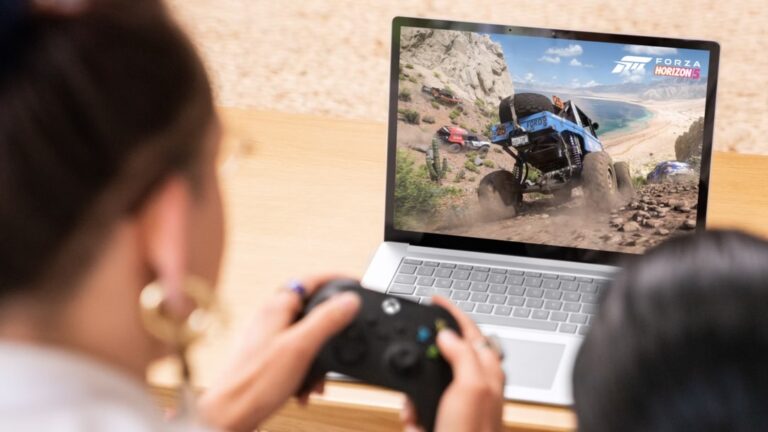
Gaming has undergone a remarkable transformation over the past few decades. From the early days of pixelated screens and simplistic mechanics to today’s immersive, hyper-realistic experiences, gaming has become a multifaceted industry that influences not only entertainment but also culture, education, and social interaction. In this comprehensive guide, we will delve into the evolution of gaming, exploring its technological advancements, impact on society, and the future of this dynamic medium.
The Beginnings of Gaming
The Birth of Video Games
The history of video games dates back to the 1950s and 1960s when early experiments were made to create interactive experiences. One of the first video games ever created was Tennis for Two, developed by physicist William Higinbotham in 1958. This simple two-player tennis game, displayed on an oscilloscope, marked the beginning of what would later become a global phenomenon.
In 1972, the release of Pong, designed by Atari founder Nolan Bushnell, brought video gaming to the masses. This was one of the first commercially successful arcade games and is considered a major turning point in the history of gaming. The simplicity of Pong and other early arcade games, such as Space Invaders (1978) and Pac-Man (1980), showcased the potential for gaming as an entertainment medium, leading to the rapid growth of the arcade game industry.
The Rise of Home Consoles
By the early 1980s, home consoles began to enter the market, providing a new way for players to enjoy games in their homes. The Atari 2600, released in 1977, became one of the most influential gaming consoles, paving the way for future systems. This was followed by the introduction of the Nintendo Entertainment System (NES) in 1985, which helped to rejuvenate the gaming industry after the video game crash of 1983.
The NES’s success was due in part to its high-quality games and innovative design, which allowed players to enjoy titles like Super Mario Bros., The Legend of Zelda, and Metroid. The rise of consoles marked a significant shift in the way games were developed and played, leading to the creation of iconic franchises that still dominate the industry today.
Technological Advancements: Powering the Future of Gaming
The Evolution of Graphics and Processing Power
As technology advanced, so too did the quality of video game graphics. The 1990s saw the advent of 3D graphics, allowing for more immersive and dynamic gaming experiences. The introduction of systems like the Sony PlayStation and the Nintendo 64 brought groundbreaking titles such as Final Fantasy VII, Super Mario 64, and GoldenEye 007, which pushed the boundaries of what was possible in terms of visual fidelity and gameplay.
In the 2000s, the rise of high-definition graphics and more powerful consoles like the PlayStation 3, Xbox 360, and Nintendo Wii led to even more lifelike environments and characters. Games such as The Elder Scrolls IV: Oblivion, Halo 3, and Super Smash Bros. Brawl showcased the capabilities of these consoles and set new standards for graphics, sound, and gameplay.
Today, the latest gaming consoles—such as the PlayStation 5 and Xbox Series X—boast incredibly detailed graphics with 4K resolution, ray tracing, and high frame rates. The power of modern consoles and PCs has made it possible to create virtual worlds that are almost indistinguishable from reality, with incredible attention to detail and interactive environments.
Virtual Reality and Augmented Reality
Virtual Reality (VR) and Augmented Reality (AR) have emerged as the next frontiers in gaming technology. VR headsets like the Oculus Rift, HTC Vive, and PlayStation VR offer players the ability to fully immerse themselves in virtual worlds. This immersive experience takes gaming to the next level by enabling players to look around, interact with objects, and feel as though they are truly inside the game world.
AR, on the other hand, enhances the real world with digital elements. Games like Pokémon GO have introduced millions to the world of AR gaming, where players interact with virtual objects overlaid on the real world. While AR gaming is still in its early stages, its potential to transform how games are played and experienced is immense.
The Impact of Gaming on Culture and Society
Gaming as a Form of Social Interaction
One of the most significant changes in the gaming landscape has been the rise of online multiplayer games. Starting with early online games like Warcraft and EverQuest in the late 1990s, multiplayer gaming became a dominant force in the industry. The advent of broadband internet in the early 2000s led to the explosion of online gaming, allowing players from around the world to connect and compete in real-time.
Games like World of Warcraft, League of Legends, Fortnite, and Overwatch have created massive online communities where millions of players interact, form friendships, and engage in cooperative or competitive gameplay. Online multiplayer gaming has not only expanded the reach of video games but also created new social dynamics, with in-game voice chat, streaming, and esports tournaments further enhancing the social aspect of gaming.
Esports: The Professionalization of Gaming
Esports, or competitive gaming, has emerged as a multi-billion-dollar industry. Professional gamers compete in tournaments for large cash prizes and sponsorship deals, drawing in millions of viewers both online and in person. Games like Dota 2, Counter-Strike: Global Offensive, and League of Legends have established esports leagues with global followings, and platforms like Twitch and YouTube have made it easier than ever for gamers to stream their gameplay to a wide audience.
Esports has become an accepted form of entertainment, with major tournaments being broadcast on television and featured in mainstream media outlets. Universities and colleges now offer scholarships for competitive gaming, further cementing esports as a legitimate career path for talented players.
Gaming and Education
Beyond entertainment, gaming has also found its place in education. Serious games, or games designed for educational purposes, are being used in schools, universities, and even the military to teach a variety of subjects, from history and science to problem-solving and strategic thinking. Games like Civilization and SimCity encourage critical thinking and strategic decision-making, while games like Minecraft are used to teach everything from architecture to coding.
The gamification of education has made learning more engaging and interactive, allowing students to actively participate in their education through immersive experiences. This trend has also extended to corporate training, where simulation-based games are used to develop leadership and teamwork skills in a more hands-on environment.
The Future of Gaming: What’s Next?
Cloud Gaming
Cloud gaming is rapidly emerging as a game-changer in the gaming industry. Services like Google Stadia, NVIDIA GeForce Now, and Xbox Cloud Gaming allow players to stream games directly to their devices without the need for expensive hardware. Instead of running games locally, the computing power is provided by powerful remote servers, making high-quality gaming accessible to anyone with an internet connection.
Cloud gaming could make gaming more affordable by eliminating the need for expensive gaming consoles or PCs. It also allows players to access a wide variety of games on-demand, making it easier than ever to discover new titles and jump into gameplay.
Artificial Intelligence and Procedural Generation
Artificial Intelligence (AI) and procedural generation are technologies that are poised to revolutionize gaming. AI can be used to create more dynamic and responsive game worlds, where NPCs (non-playable characters) react intelligently to player actions and adapt to changing conditions. This can make the gaming experience feel more immersive and personalized.
Procedural generation, which involves creating game content algorithmically rather than manually, allows for the creation of vast, procedurally generated worlds with endless possibilities. Games like No Man’s Sky and Minecraft have shown the potential of this technology, where entire planets, ecosystems, and environments can be generated on the fly, creating an infinite number of unique experiences for players.
The Metaverse
The concept of the Metaverse, a fully immersive, interconnected virtual world where people can socialize, work, and play, is another exciting development in the future of gaming. Companies like Facebook (now Meta) are already investing heavily in creating metaverse experiences, and many believe that gaming will play a central role in its development.
In the Metaverse, players will be able to not only play games but also engage in virtual economies, build virtual businesses, and interact with others in ways that were previously unimaginable. The potential of the Metaverse to blend gaming, social interaction, and virtual reality is immense, and it could become the next frontier of entertainment and digital experience.
Frequently Asked Questions (FAQs)
What are the best gaming platforms for beginners?
For beginners, it’s recommended to start with user-friendly platforms like the Nintendo Switch, which offers a variety of family-friendly games, or PC gaming with easy-to-access platforms like Steam or Epic Games Store. Consoles like the Xbox Series X and PlayStation 5 are also great for those who want a seamless gaming experience without the complexity of building a gaming PC.
How has gaming impacted social interactions?
Gaming has created a global platform for social interactions through online multiplayer games. Players can connect with others across the world, form friendships, and even compete in esports. In-game communication, streaming, and social media platforms have all enhanced the social aspect of gaming, making it a collaborative and interactive experience.
Will cloud gaming replace traditional gaming consoles?
Cloud gaming has the potential to replace traditional gaming consoles in the future, especially as internet speeds improve and cloud services become more reliable. While consoles will likely remain a popular choice for many players, cloud gaming could provide more flexibility, allowing players to access games without the need for expensive hardware.
The gaming industry has evolved from a niche pastime to a global phenomenon that influences multiple aspects of society. With constant technological advancements, gaming will continue to push boundaries and provide new experiences for players worldwide. As the industry progresses, the future of gaming looks brighter than ever, with innovations like cloud gaming, AI, and the Metaverse leading the way.